Head
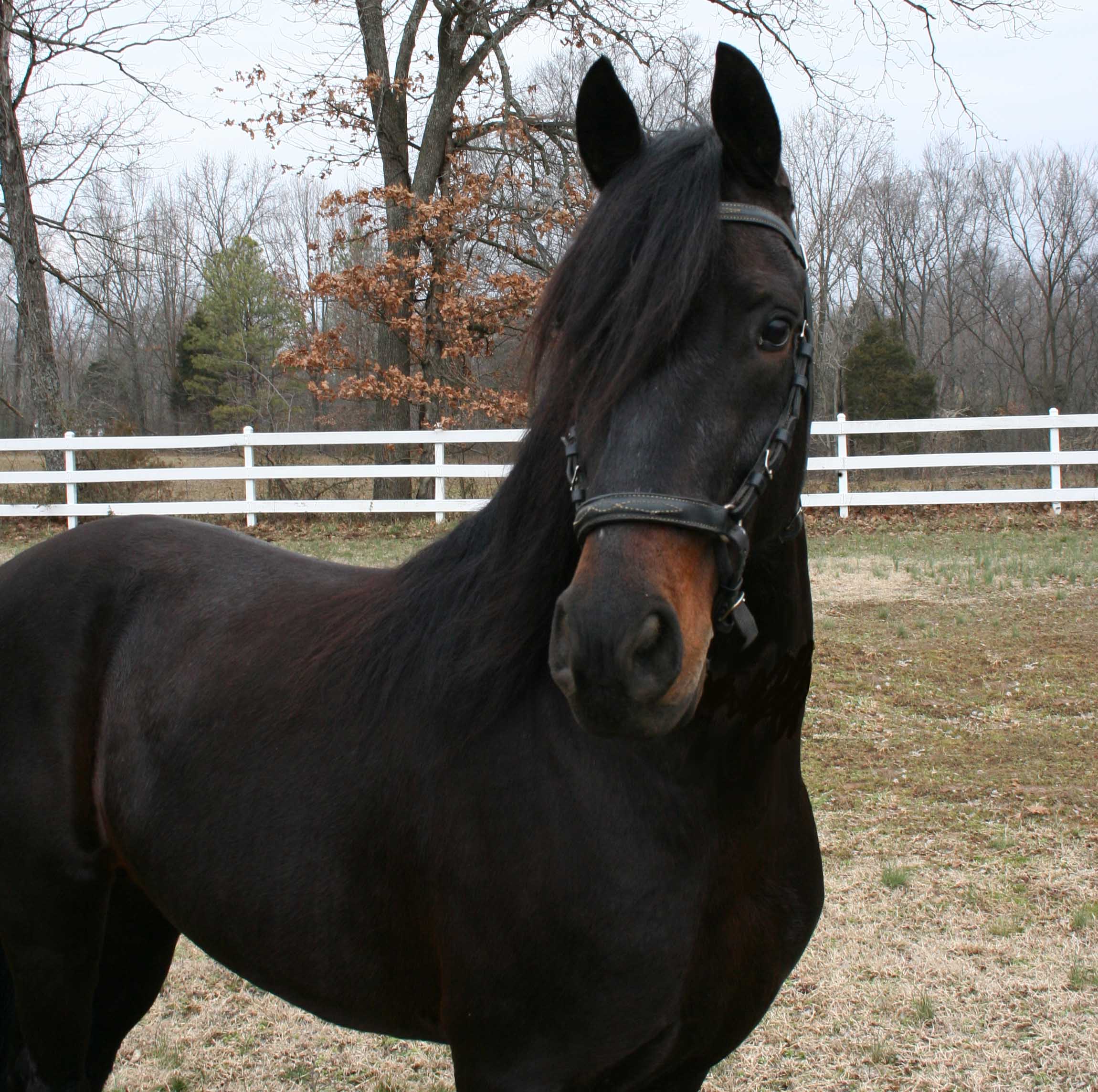
The head should be refined and in good proportion to the body
of the horse, neither extremely small nor large with the preferred profile being
straight. Eyes are large, dark and well spaced, very expressive and alert, and
should not show excessive white around the edges. Ears are comparatively short,
set close and curved inward at the tips. The lips should be firm and the
nostrils large and dilatable. Jaws are defined but not extreme. The impression
should be of the well-shaped alert and intelligent face.
Neck
Gracefully arched, medium in length and set on at an angle to
allow high carriage, breaking at the poll. Throat latch should be refined and
well defined.
Forehand
Shoulders are sloping into the withers with great depth
throughout the heart. Chest is moderate in width. Withers are defined but not
pronounced and slope smoothly into the back.
Mid-Section
Moderate in length with a well sprung rib cage. Top line
should be proportionately shorter than the underline. The back should be strong
and muscled. The mid-section should join the forehand and hindquarters so as to
give the horse a pleasing proportioned appearance.
Hindquarters
Croup is slightly sloping with rounded hips, broad loins and
strong hocks. Tail is carried gracefully when the horse is in motion.
Legs
Straight, rather delicate in appearance, but having strong
tendons and well separated from the bone. Hooves are small and do not show much
heel.
|

Cuatro Rios VL Altanero
Mane, Tail and Forelock
As long, full and luxurious as nature can provide. No
artificial additions or alterations are allowed.
Size
13 to 15.2 hands with 13.7 to 14.2 being the most typical.
Weight from 700 to 1200 lbs. Full size may not be attained until the fifth year.
Color
Every equine color can be found with or without white
markings.
Disposition
Gentle at hand but spirited under saddle.
Gait
The Paso gait is essentially a broken pace, a lateral, not
diagonal gait. The sequence of the hooves are: right rear, right fore, left
rear, left fore; the hind foot touching the ground a fraction of a second before
the front foot. When performed on a hard surface, a definite 1,2,3,4 beat can be
heard. This serves to eliminate the jarring effect of a true pace and causes the
rider practically no up and down movement. The motion of the horse is absorbed
in the back and loins giving the rider comfort. This gait is performed at three
speeds with the collection of the carriage decreasing as the speed increases.
|